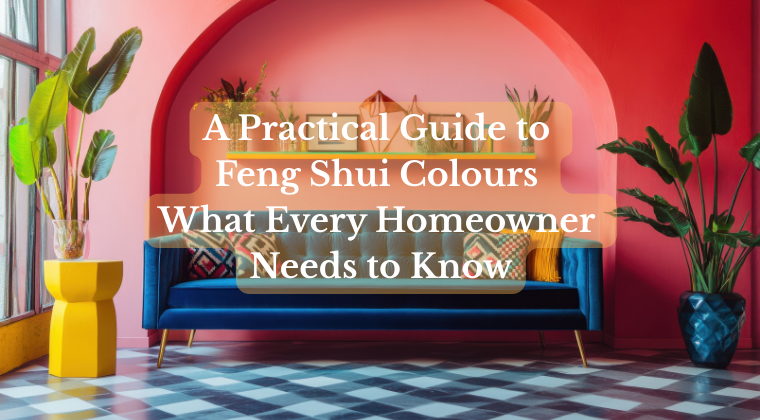
A Practical Guide to Feng Shui Colours: What Every Homeowner Needs to Know

Feng Shui Colours: How to Choose the Right Colours for Every Room
When people first hear about Feng Shui colours, they often jump straight to “What colour should I paint my wealth corner?” or “Is green good for my bedroom?”
The real answer is more layered than a simple colour list.
In authentic Feng Shui, the best colour choice for a room comes from a menu of analysis:
-
the active Flying Star in the room
-
the compass sector
-
the purpose of the room
-
and, in some cases, the personal energy of the person using it
When you understand this order of priority, your Feng Shui colours stop being guesswork and start becoming a precise tool.
Why Feng Shui Colours Matter More Than You Think
Colours influence our daily lives far more than we consciously realise. They shape behaviour, trigger emotional responses, influence appetite, impact spending, and change how we interpret an environment.
Our language gives this away:
-
“You’ve got the blues”
-
“Paint the town red”
-
“Tickled pink”
-
“Green with envy”
-
“The business is in the red”
We feel colour before we think about it.
Warm tones energise and activate.
Cool tones calm, cool and soften.
Dark tones create depth, seriousness, or even heaviness.
In Feng Shui, colours become a powerful tool because they can shift the Qi of a space without changing any structural elements. One brushstroke, one feature wall, or a few key décor pieces can redirect the emotional tone of an entire room.
How Colour Works Energetically
At a physical level, colour is energy – vibrating waves of light that our eyes and brain interpret.
-
Visible light sits between ultraviolet and infrared on the electromagnetic spectrum.
-
Each colour has its own wavelength and frequency.
-
Red vibrates more slowly with a longer wavelength.
-
Violet vibrates faster with a shorter wavelength.
When light hits an object, some wavelengths are absorbed and others are reflected.
The colour you see is the colour the object is rejecting.
In Feng Shui terms, that reflected colour is the wave of energy entering your space and interacting with the Qi. So when you choose Feng Shui colours, you’re literally choosing which frequencies you want bouncing around your environment.
The Feng Shui Colour “Menu”: Order of Priority
Before we dive into specific rooms, here’s the most important part of this whole blog:
When you choose Feng Shui colours for a space, you don’t start with trends or favourite shades. You follow a menu of analysis – an order of priority.
1. The Flying Star of the Room (Number One Priority for Active Rooms)
For front entrances, living rooms, studies, kitchens and bedrooms, the active Flying Star is the first thing to consider.
-
The Flying Star tells you the natal energy of that room.
-
Your colour choices should respect that star, not aggravate it.
-
In most cases, colours are gentle – but Fire colours (especially bright red) can activate or inflame a star.
So when people ask, “What’s the best colour for my living room?”
The correct answer is: “It depends on the Flying Star chart.”
If you don’t know the Flying Stars chart of your home, you can enrol in the FREE Flying Stars Made Simple course with The Feng Shui Institute. Learn the exact techniques professionals rely on to construct the Flying Stars chart for any home. Click here to start the free course.
2. The Compass Sector (Secondary Support)
Once you know the Flying Star, you can refine your Feng Shui colours using the compass sector.
For example:
-
A living room in the East (Wood) may feel good with greens and gentle Wood tones,
-
A room in the South (Fire) may work well with warm, uplifting tones.
The Flying Star remains the priority; the compass sector is a layer of harmony, not the main driver.
3. The Intention of the Room
Then you look at what the room is for:
-
Rest and recovery?
-
Focus and study?
-
Connection and conversation?
-
Cooking and nourishment?
Choose Feng Shui colours that support the emotional atmosphere you want in that space. For example:
-
Soft Earth tones for comfort and grounding
-
Gentle blues or greens for calm and recovery
-
Subtle yellows for mental focus and clarity
4. The Person’s Personal Feng Shui (Optional Layer)
You can go further by using:
-
Their Four Pillars (Ba Zi)
-
Their Feng Shui life number / Kua number
-
Their favourable elements and colours
This layer is especially helpful in bedrooms and personal offices, where one person’s energy is primary.
Feng Shui Colours for Each Room Type
Now let’s put this into practical language for your home.
Front Entrance
The front entrance is where Qi enters the home, so you want it to feel welcoming, stable, and aligned.
-
Check the Flying Star at the main door.
-
Avoid bright red if the star here is challenging.
-
Choose colours that:
-
Support the star (without overstimulating it)
-
Harmonise with the compass sector
-
Feel inviting and grounded
-
Simple rule:
Let the Flying Star lead, then soften with Earth tones, Wood tones, or neutrals that feel calm and stable.
Living Rooms
Living rooms are active spaces where the family spends a lot of time, so the Flying Star here has a major influence on daily life.
-
Start with the Flying Star.
-
Avoid using Fire (especially red) on walls or large areas if the star is already volatile.
-
Then work with the compass sector:
-
Wood areas → greens, timbers, soft blues
-
Earth → warm neutrals, sandy tones, terracotta accents
-
Metal → whites, greys, metallic finishes in moderation
-
Because living rooms are social spaces, Feng Shui colours here should feel balanced, not extreme. Think:
A colour story that supports conversation, connection, and ease – not agitation.
Studies and Home Offices
In a study, your priorities are:
-
Mental clarity
-
Focus
-
Stability
Again, start with the Flying Star. Then bring in colours that support concentration:
-
Soft yellows → intellect, clarity
-
Muted blues → calm focus
-
Gentle greens → balanced growth
Avoid:
-
Strong red walls
-
Harsh high-contrast schemes that agitate the nervous system
Red in an office can quickly become frustration, irritability and eye strain.
Your Feng Shui colours here should help you think clearly and work steadily.
Kitchens
Kitchens are active, fiery spaces already – with heat, movement, and sharp objects.
-
Begin with the Flying Star of the kitchen.
-
Avoid intense Fire colours (bright red) if the star is already challenging.
-
Then consider the compass sector:
-
East / Southeast (Wood) → fresh greens, light timbers, soft neutrals
-
South (Fire) → be careful not to overheat with too much red; use warm neutrals or gentle peach/coral tones instead
-
Earth sectors → warm, grounded, earthy palettes
-
Remember: kitchens are Yang and busy. Use Feng Shui colours to keep them feeling supportive, not overwhelming.
Bedrooms
Bedrooms are different.
Rule number one:
Bedrooms should always be considered through the lens of the Flying Stars first – because this is where you rest, heal, and spend long, still hours.
However:
-
Most colours do not significantly change the Flying Stars.
-
The major exception is bright red (strong Fire), which can activate a star – good or bad.
So when choosing Feng Shui colours for a bedroom:
-
Respect the Flying Star (no big red feature walls over challenging stars).
-
Choose colours based on what the person emotionally needs:
-
Calm and recovery? → soft greens, blues, Earth tones
-
Confidence and warmth? → gentle pinks, peaches, warm neutrals
-
-
Optionally, use their favourable personal colours from their astrology or Kua number.
Think of bedroom colours as:
“What does this person need to feel safe, loved, rested, and restored?”
The star sets the boundary (no harsh Fire over sensitive energies). Within that, you design for the person.
Wet Rooms: Bathrooms, Toilets, Laundries
Wet rooms in classical Feng Shui are treated differently. Qi here tends to drain away through plumbing, and we generally don’t use them as energy-activating spaces.
Because of that:
-
Flying Stars are not considered “active” in wet rooms the same way as in living spaces or bedrooms.
-
For colour selection, you can lean more heavily on the compass sector and the practical feel of the room.
General guidelines:
-
Bathrooms and laundries often feel best in clean, light, refreshing tones – whites, soft neutrals, gentle blues or greens.
-
Use the compass sector to refine your palette:
-
Wood sectors → fresh greens, eucalyptus tones
-
Earth sectors → warm creams, light taupe
-
Metal sectors → whites, grey, soft metallic accents
-
Here, Feng Shui colours are about cleanliness, clarity, and emotional ease rather than star activation.
The Big Exception: Why Red Is Different
You’ll notice one colour keeps getting singled out: red.
Bright red belongs to the Fire element, and Fire is strong enough to activate both beneficial and challenging stars.
-
Red can strengthen prosperity stars when used correctly.
-
It can also aggravate difficult stars and increase arguments, anxiety, or volatility if used in the wrong room.
Because of that:
-
Use bright red with caution.
-
Avoid painting entire walls red over challenging stars or in already “hot” sectors.
-
If you do use red, keep it to smaller accents and know exactly which star you’re feeding.
All other colours are comparatively gentle and don’t have the same activating power.
Using Feng Shui Colours as a Self-Development Tool
The more you work with Feng Shui colours, the more you realise you’re not just decorating – you’re doing self-development through your environment.
Colour can:
-
Calm or amplify your emotions
-
Support your focus or scatter it
-
Reflect your boundaries, confidence, and self-worth
-
Help you feel held, seen, inspired or safe
Combined with the Flying Stars, colour becomes a way to:
See yourself through the lens of your home – and then design a space that supports who you’re becoming.
When you choose colours based on Flying Stars, compass sector, room purpose, and personal energy, you’re no longer asking, “What colour is lucky this year?”
You’re asking, “What does this room – and this person – genuinely need?”
That’s where real Feng Shui begins
You’ve taken the first step by learning the principles.
Now take the step that actually changes your life: mastering Feng Shui in a way that professionals use every day to transform homes, businesses, and outcomes.
Whether you’re starting with the foundations or ready to commit to full mastery, there is a course that will elevate everything you thought you knew.
Discover the Feng Shui courses that lead to clarity, confidence, wealth, and life-changing results.
Click here to explore your next step.
Related posts